
How Much Cash Should You Bring to Bali? A Practical 2026 Guide
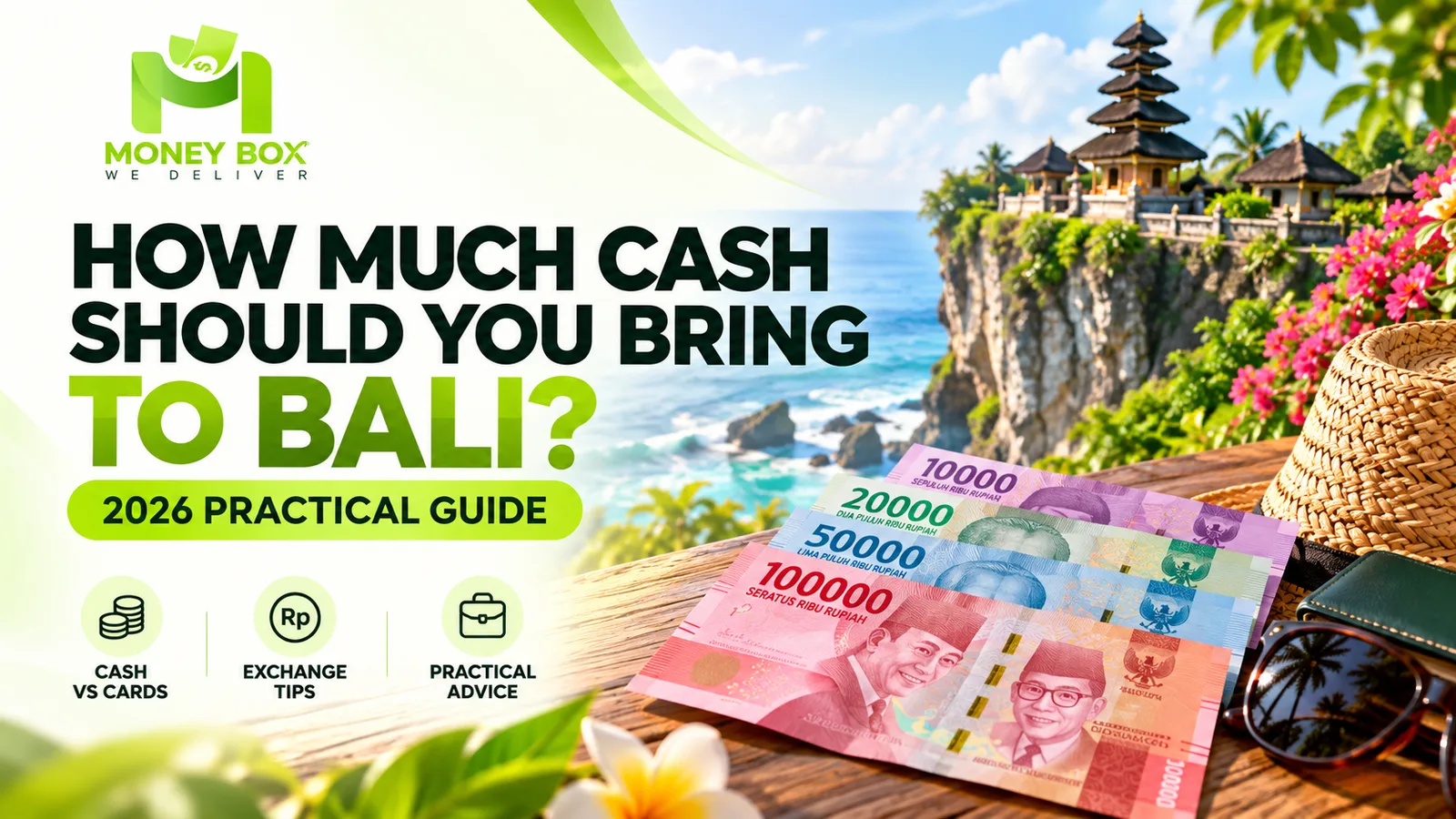
If you are planning a trip to Bali, deciding how much cash to bring can make your holiday more convenient and help you avoid carrying unnecessary amounts of money.
Cards are widely accepted at hotels, restaurants, beach clubs, shopping centres and many established businesses, but Indonesian rupiah is still useful for markets, small shops, tips, parking, local food and other everyday purchases.
Rather than bringing your entire holiday budget in cash, it is usually more practical to carry enough rupiah for your immediate needs and keep other payment options available.
Do You Still Need Cash in Bali?
Yes. Bali is increasingly card-friendly, particularly in tourist areas, but cash is still useful.
You may need rupiah for smaller restaurants and warungs, local markets, parking, tips, small shops and businesses that do not accept cards.
Even if you plan to pay mainly by card, keeping some cash available gives you a useful backup if a card terminal is unavailable or you find yourself somewhere that only accepts cash.
How Much Cash Should You Carry Each Day?
There is no single amount that is right for every traveller.
Someone staying at a resort and paying most expenses by card may need very little cash. Someone visiting markets, eating at local restaurants, taking short trips and making frequent small purchases may use considerably more.
A practical approach is to keep enough cash for approximately one or two days of normal spending rather than carrying your entire holiday budget at once.
Consider what you expect to spend on:
- Food and drinks
- Transport
- Markets and small shops
- Tips
- Parking
- Attractions
- Unexpected expenses
You can then replenish your rupiah when necessary.
Cash, Cards and ATMs: Use a Mix
You do not have to choose between cash and cards. For many travellers, using a combination is the most convenient option.
Cards can be useful for larger purchases such as hotels, established restaurants and shopping. Cash can then be reserved for smaller transactions.
ATMs can provide another way to access rupiah, although your bank or card provider may charge withdrawal or foreign-transaction fees.
Before travelling, check what your bank charges for overseas card use and ATM withdrawals. Small fees can add up if you make frequent withdrawals.
If you plan to exchange foreign currency during your trip, our complete guide to exchanging money in Bali explains the main options available and what to check before completing an exchange.
Should You Bring Rupiah or Foreign Currency?
You can arrive with some Indonesian rupiah already available, but it is not necessary to convert your entire travel budget before arriving in Bali.
Another option is to bring a major foreign currency and exchange it in Bali when needed.
If you exchange foreign currency, compare the complete transaction rather than looking only at the advertised exchange rate.
Ask how much IDR you will actually receive after any applicable fees or commission.
Note condition can also matter. Torn, heavily marked, stained or badly worn foreign banknotes may sometimes be rejected or receive a different quote.
A Simple Bali Money Strategy
A simple approach is to divide your travel money between several payment methods.
- Keep enough rupiah for approximately one or two days of everyday expenses.
- Keep a card available for larger purchases and as a backup.
- Avoid carrying your entire holiday budget in your wallet.
- Check exchange rates before exchanging foreign currency.
- Confirm the final IDR amount before completing an exchange.
- Keep emergency money or a second payment method separate from your main wallet.
This gives you flexibility without requiring you to carry a large amount of physical cash.
Getting Indonesian Rupiah in Bali
Exchange rates move with the foreign-exchange market, but the amount offered by individual money changers can differ.
When comparing exchange services, look beyond the number displayed on the signboard.
Confirm:
- The exchange rate for your exact currency
- Whether any commission or fee applies
- The final amount of Indonesian rupiah you will receive
- Whether your particular banknotes are accepted
If an advertised rate appears dramatically better than other nearby options, check the calculation and conditions carefully before completing the transaction.
Price is not the only factor to consider when choosing where to exchange money. Our guide to safely exchanging currency in Bali covers fees, exchange methods and practical checks to make before handing over your money.
It is also worth knowing the warning signs of an unreliable exchange service. Read our guide to avoiding money changer scams in Bali for common red flags and practical ways to reduce the risk of being short-changed.
Using MoneyBox in Bali
MoneyBox provides foreign-currency exchange services in Bali and publishes current exchange information online.
Before visiting, you can check the latest available exchange information and choose a convenient MoneyBox location.
MoneyBox also supports selected digital-asset-to-rupiah services. Rates, availability and transaction requirements can change, so always confirm the current quote and applicable process before completing a transaction.
Final Takeaway
So, how much cash should you bring to Bali?
For most travellers, there is little reason to carry their entire holiday budget as physical cash. A more practical strategy is to keep enough rupiah for approximately one or two days of routine expenses and combine it with cards or other payment methods.
When exchanging money, compare the final amount of IDR you will receive rather than choosing a provider based only on the advertised rate.
Frequently asked questions
Do exchange rates change every day?
Yes. Foreign-exchange markets move continuously, and retail exchange quotes can change during the day. Check the current quote close to the time you plan to exchange money.
Should I choose the money changer with the highest advertised rate?
Not automatically. Confirm the rate for your exact currency and banknotes, whether any fees apply, and the final amount of Indonesian rupiah you will receive.
Do I need to carry all of my Bali spending money in cash?
Usually not. Many travellers use a combination of Indonesian rupiah and cards, keeping enough cash available for smaller purchases, tips, markets and places that do not accept cards.
Can the condition of my banknotes affect currency exchange in Bali?
Yes. Torn, stained, heavily marked or badly worn foreign banknotes may be rejected or receive a different exchange rate depending on the currency and exchange provider.
Ready to exchange?
Message us on WhatsApp for today’s rate, or check the live converter. Same-day cash delivery across Canggu and South Bali.
WhatsApp +62 822 6459 8674